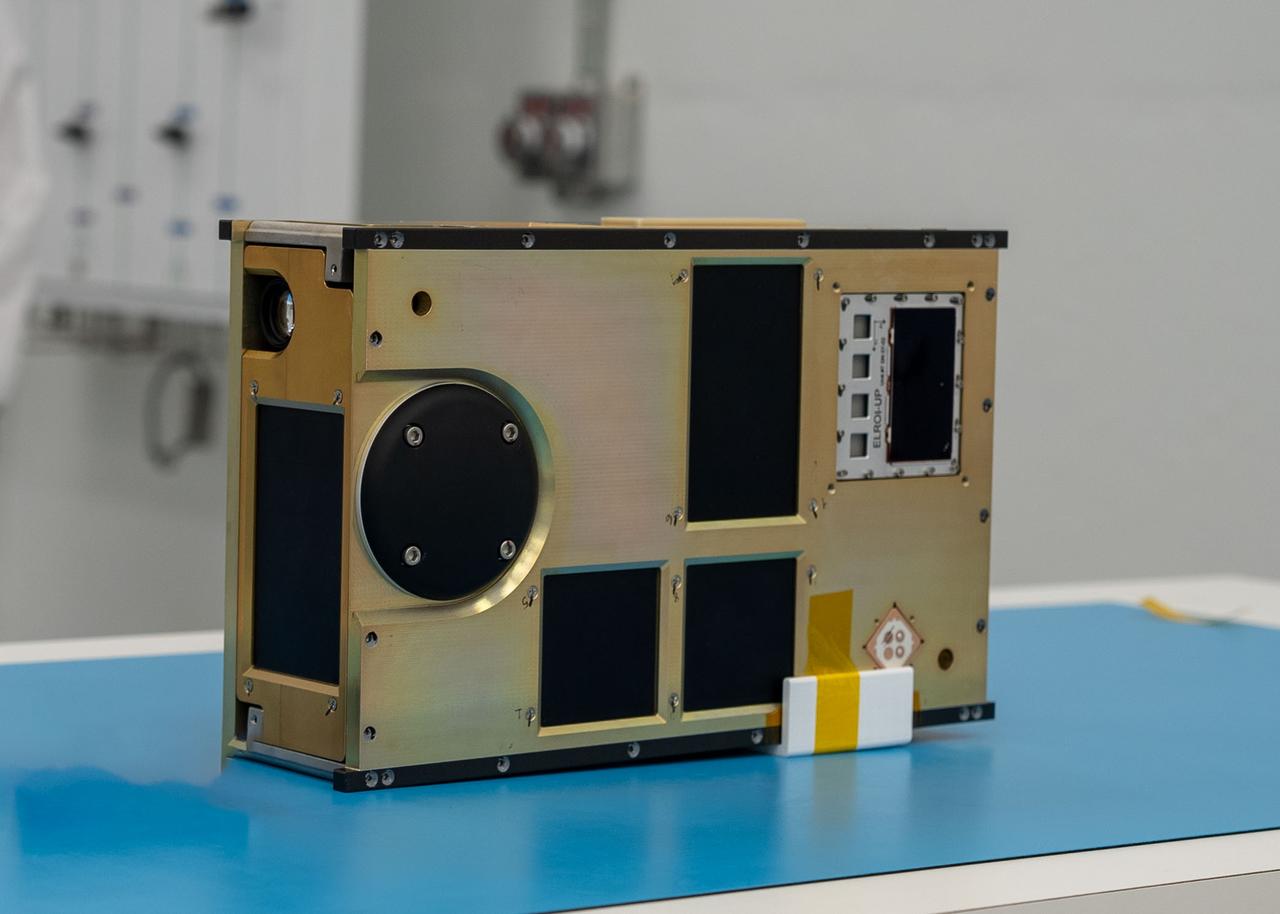
| Satellite name | R5-S9 (Realizing Rapid, Reduced-cost high-Risk Research project Spacecraft) |
|---|---|
| Type | CubeSat |
| Units or mass | 6U |
| Status | Operational? (No clear news found as of 2026-07-31) |
| Launched | 2026-07-07 |
| NORAD ID | ? |
| Deployer | Equalizer Flex [SEOPS] |
| Launcher | Falcon 9 (Transporter-17) |
| Organization | NASA Johnson Space Center |
| Institution | Space agency |
| Entity | Government (Civil / Military) |
| Country | US |
| Operator | In-house? |
| Launch brokerer | SEOPS |
| Partners | Sandia National Laboratories |
| Oneliner |
Demonstrating autonomous observation and low-cost optical communications. |
| Description |
Prototypes from Sandia National Laboratories and The Aerospace Corporation, including autonomous observation technology and a low cost optical communication system. The R5-S9 satellite will host multiple technology prototypes, advancing capabilities with in-orbit testing of technologies. In partnership with Sandia National Laboratories, this R5 mission will demonstrate technology that leverages edge computing for autonomous observation of phenomena on Earth and in space. In addition to the Sandia payload, R5-S9 will attempt to demonstrate a new, low-cost optical communication system developed by The Aerospace Corporation and supported through NASA’s Center Innovation Fund. |
| Notes |
Size could be wrong. |
| Sources | [1] [2] [3] |
| Photo sources | [1] |
| Keywords | Laser transmitter |
| On the same launch |
|
Last modified: 2026-07-31
