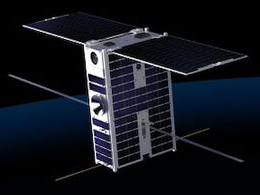
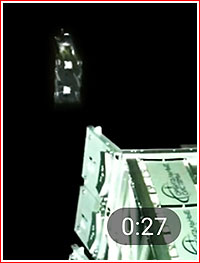
Khors 5 Spacecraft

Khors 5
Khors 5
Khors 5
Khors 5
Khors 5
Khors 5
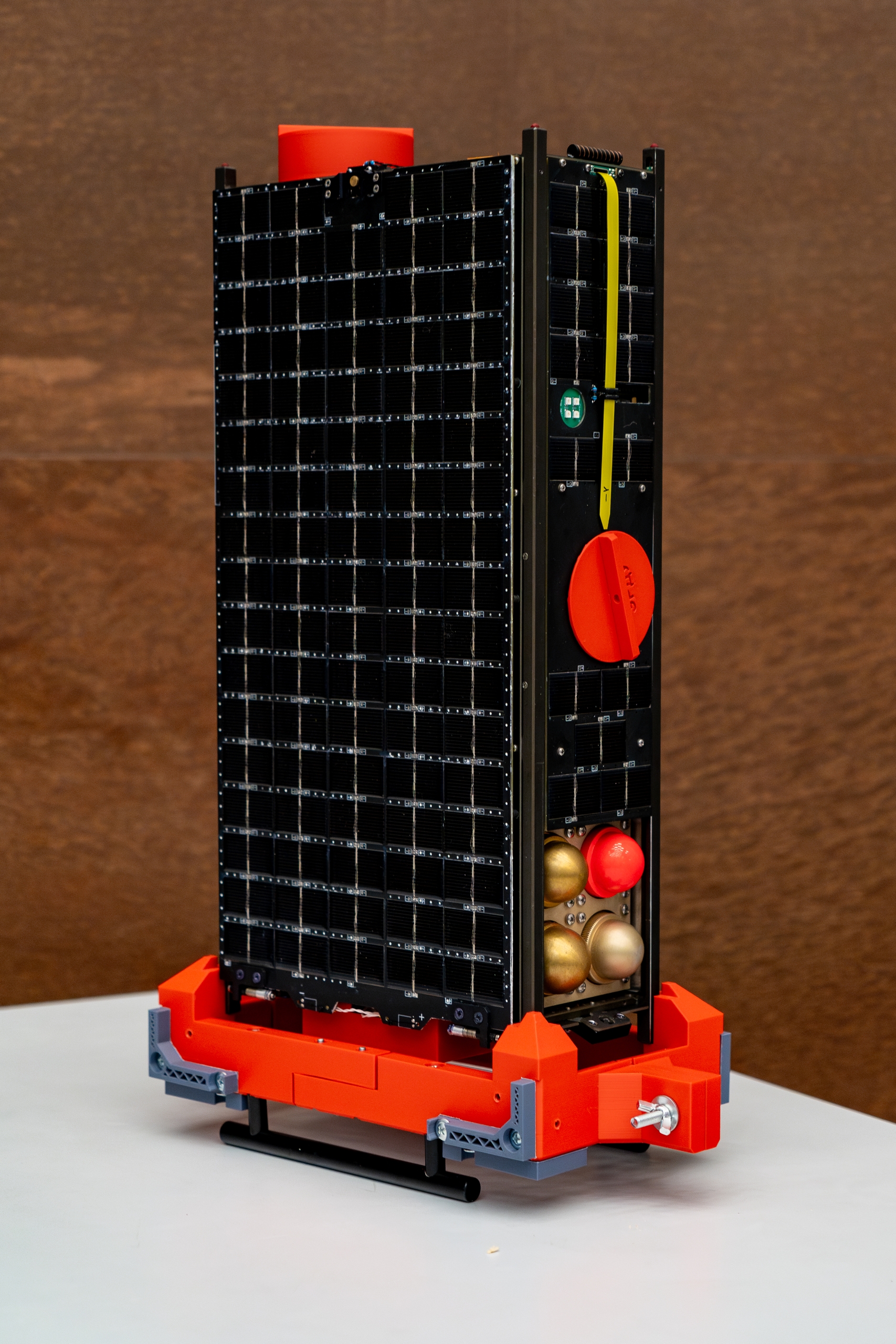
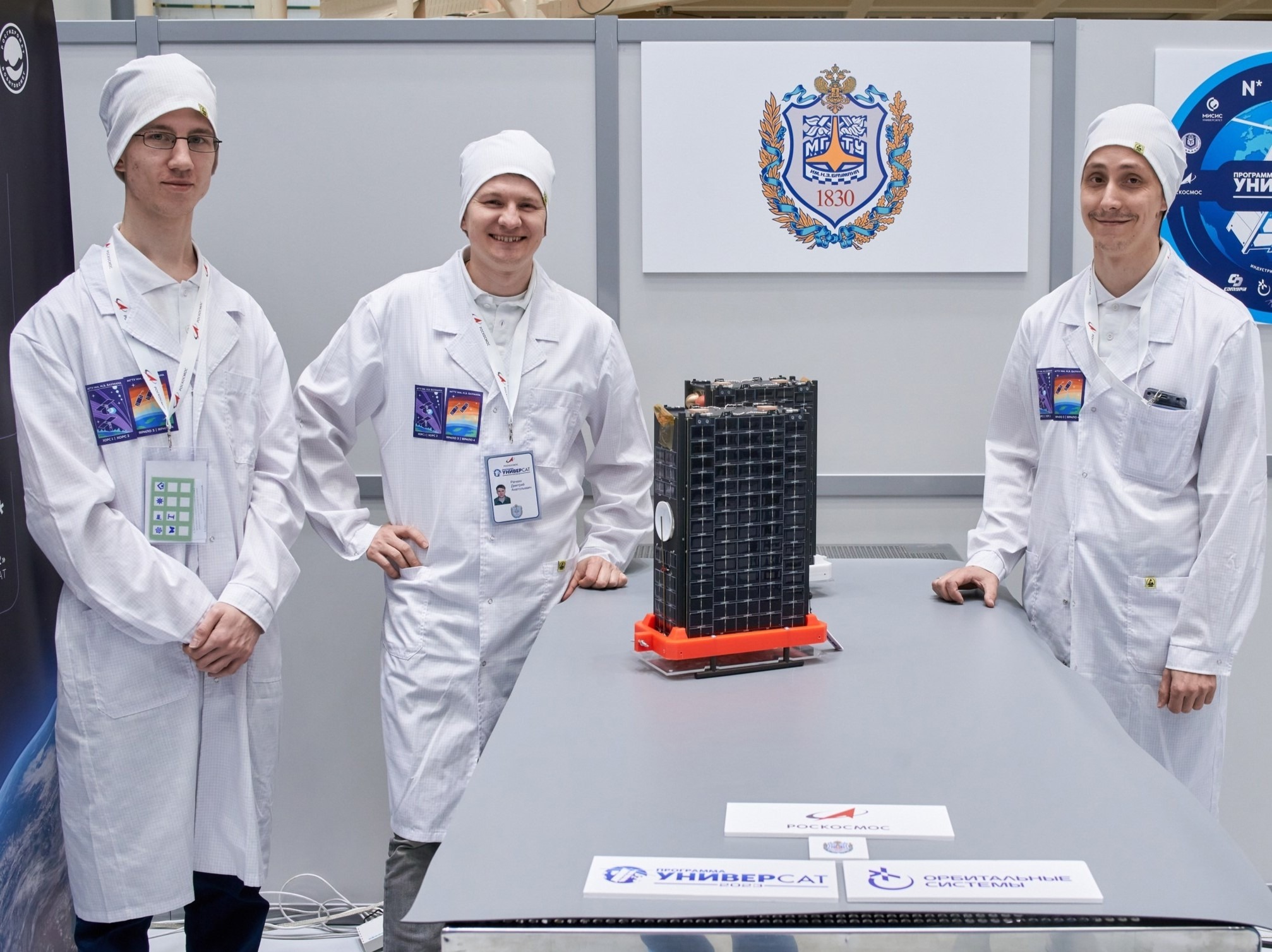
Spacecraft Khors 5 (Khors No. 5, Hors 5)
Form factor CubeSat
Units or mass 8U
Mass in kg 13 kg
Status Operational? (Social media post by KB "ProKit on 2025-12-29)
Launched 2025-12-28
NORAD ID ?
Deployer Deployment System [Orbital Systems]
Launcher Sojuz
Entity name Bauman Moscow State Technical University
Institution University
Entity Academic / Education
Headquarters Russia
Operator In-house?
Oneliner

Space weather, galactic rays studies, plasma thruster tests.

Description

One of the main tasks of the UniverSat program's small satellites is to monitor processes occurring in the space between the Sun and the Earth's surface, known as "space weather," in low Earth orbits. Khors No. 5 is directly responsible for this task. Two of its key instruments will operate for Roshydromet, and the third for the Ministry of Transport.

The GAMVEKI-GM galactic cosmic ray detector (developed by the Fedorov Institute of Applied Geophysics)
measures the total flux density of protons and electrons using Geiger counters in four energy ranges (electrons with energies ≥0.15 MeV, ≥0.7 MeV, ≥1.7 MeV, ≥4.2 MeV; protons with energies ≥5 MeV, ≥15 MeV, ≥25 MeV, ≥40 MeV). The number of charged particles—the radiation level—is a key parameter of "space weather," affecting the operation of equipment in near-Earth space and polar latitudes.

The "Detector-GNSS" device (developed by ProKIT Design Bureau of Bauman Moscow State Technical University) will be used to study the operation of radio occultation equipment for the Earth's atmosphere and ionosphere using signals from the GLONASS and GPS global navigation satellite systems. Data from this device will potentially provide information on the state of the atmosphere on a global scale, necessary for weather forecasting.

AIS signal receiver (developed by ProKIT Design Bureau, Bauman Moscow State Technical University) is designed to monitor sea and river vessels using automatic identification system (AIS) signals. The received data will be transmitted continuously, around the clock, to the state-owned shipping monitoring system "Victoria" of the Federal State Unitary Enterprise "Morsvyazsputnik" (Russian Ministry of Transport).

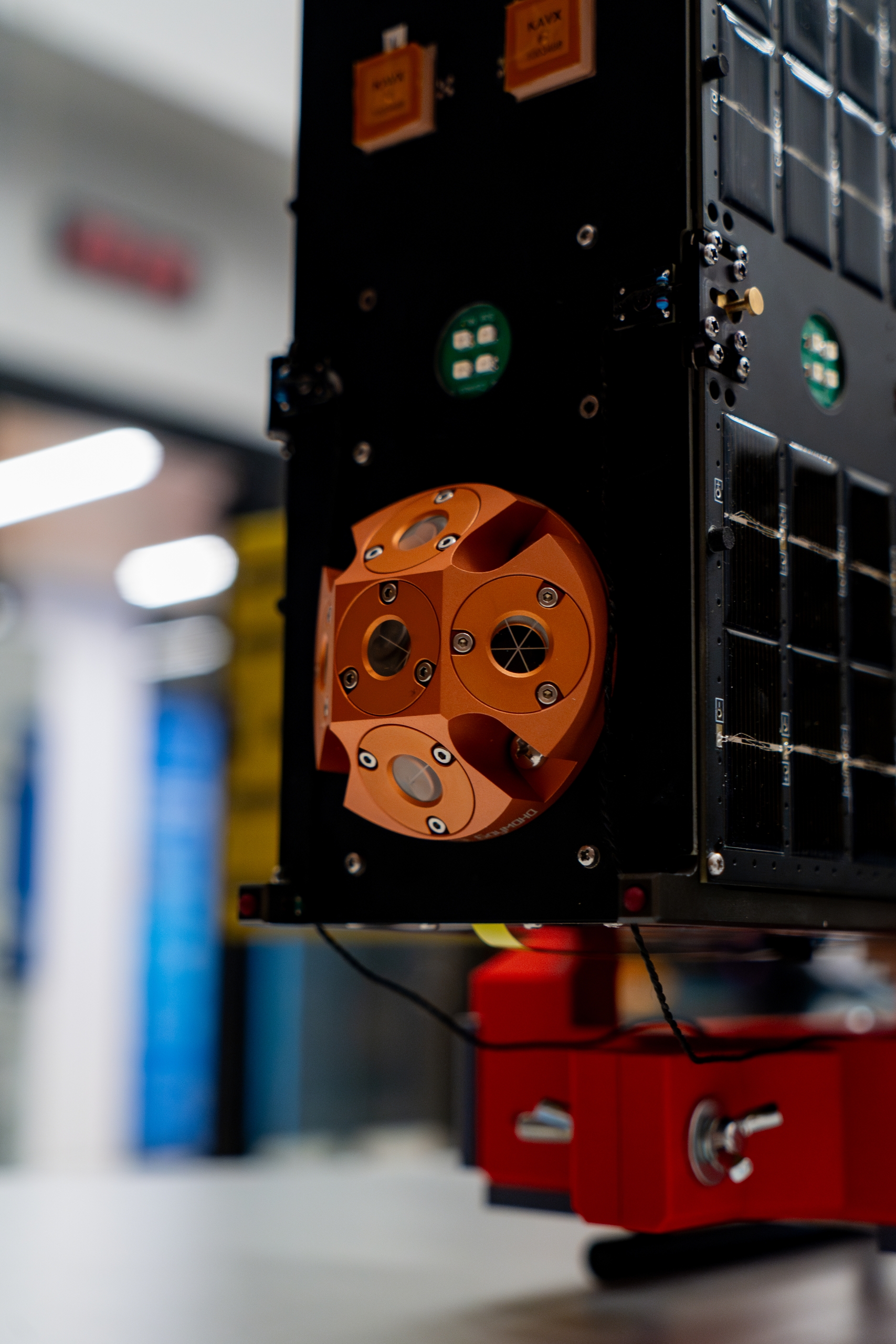
Optical retroreflector (developed by students of the Bauman Moscow State Technical University's PISh). A study will be conducted on the possibility of determining the orbital parameters of a small spacecraft with high accuracy using the laser location method.

A star sensor (developed by the Gravity Training Center of the Bauman Moscow State Technical University) will allow the determination of the angular coordinates of the spacecraft using a star map.

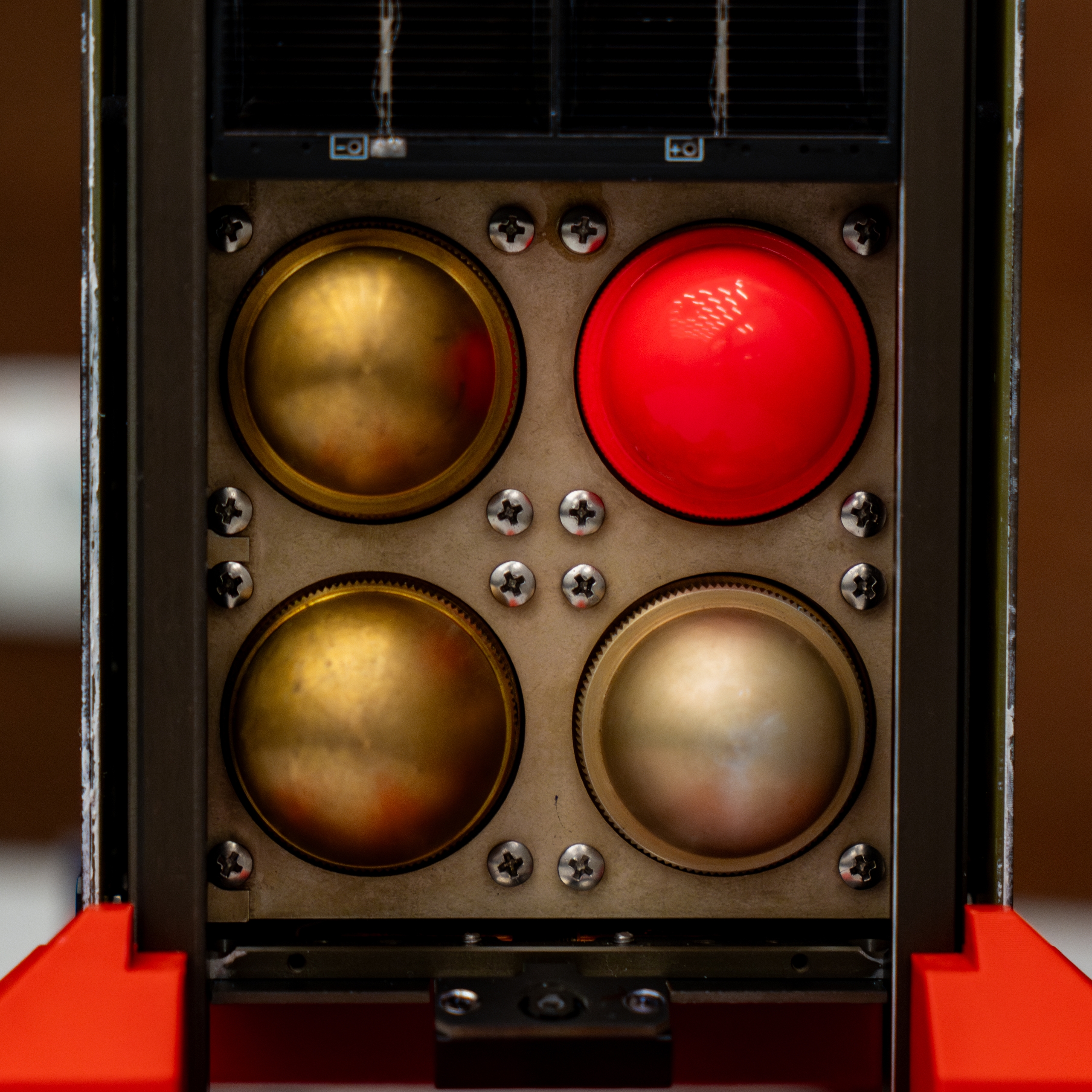
A high-frequency plasma propulsion system (developed by Advanced Propulsion Systems LLC) using krypton, with a thrust of 1 to 10 mN. Designed for maneuvering small satellites.

Sources [1] [2] [3] [4] [5]
Photo sources [1] [2] [3] [4]
COTS subsystems
  • THRUSTER - Advanced Propagation Systems
Keywords Propulsion, AIS, Retroreflector
On the same launch

Last modified: 2026-01-04

Feel free to connect at any time.

Created by Erik Kulu

Email: erik.kulu@nanosats.eu
LinkedIn: linkedin.com/in/erikkulu

Social Platforms

LinkedIn: Nanosats
Twitter: @nanosatellites

Sister Websites

NewSpace Index: newspace.im
Factories in Space: factoriesinspace.com

Copyright © 2014 - 2026 Erik Kulu
