
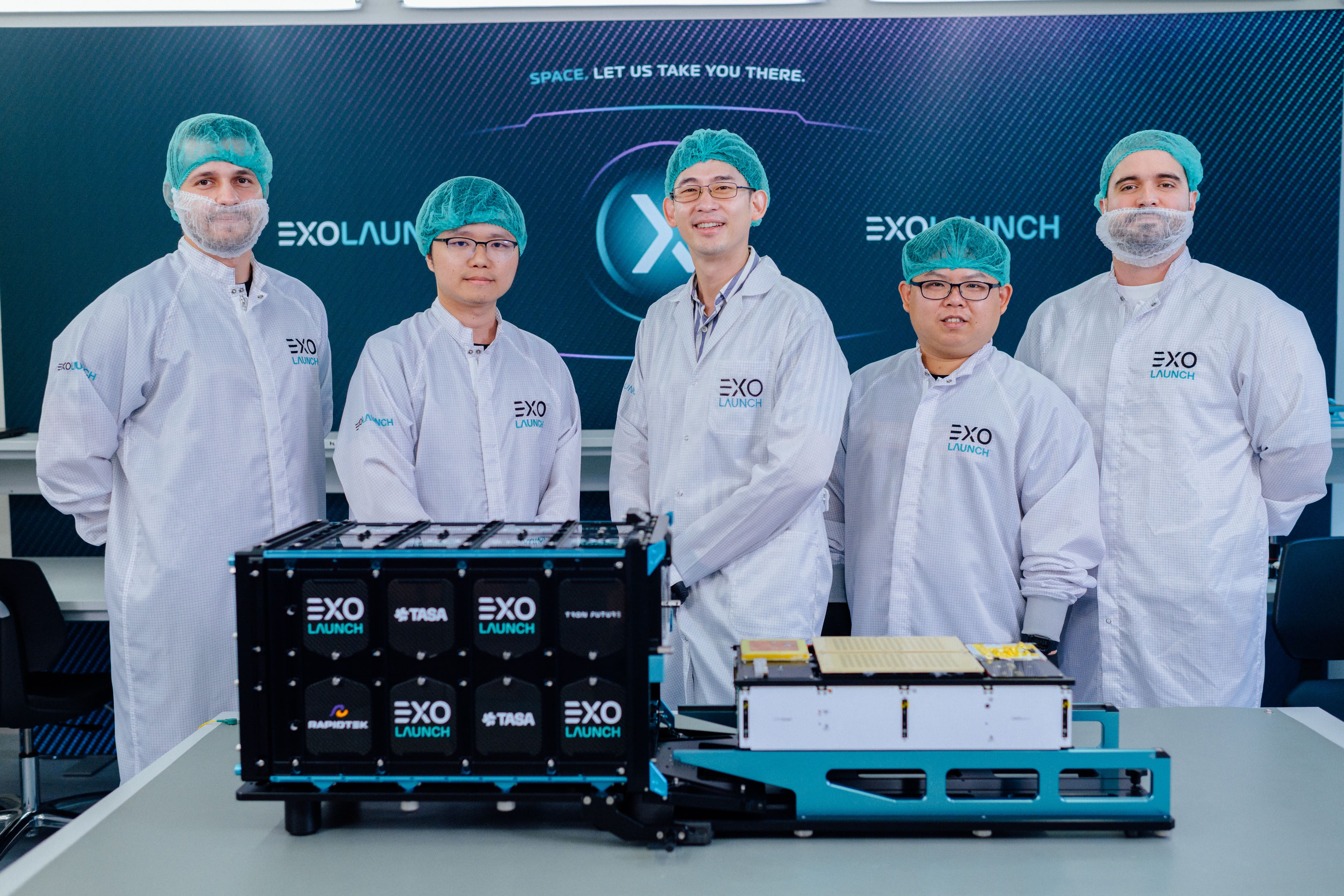



Black Kite Spacecraft

Black Kite
Black Kite
Black Kite
Black Kite
Black Kite
Black Kite
Black Kite
Black Kite
Black Kite
Black Kite
Black Kite
Black Kite
Spacecraft name Black Kite
Type CubeSat
Units or mass 8U
Organisation Rapidtek Technologies
Institution Company
Entity type Commercial
Nation Taiwan
Partners Taiwan Space Agency (TASA), Industrial Technology Research Institute (ITRI)
Oneliner

Confirming system stability and pointing accuracy; validating Rapidtek’s Ku-band high-speed and LoRa low-data-rate communication payloads; and testing the high-precision GPS receiver and space-grade GPGPU.

Description

This successful orbital insertion officially initiates Rapidtek’s LEO satellite constellation deployment plan.
 
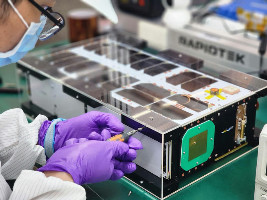
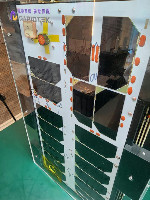
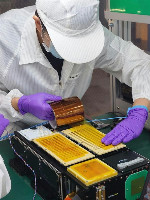
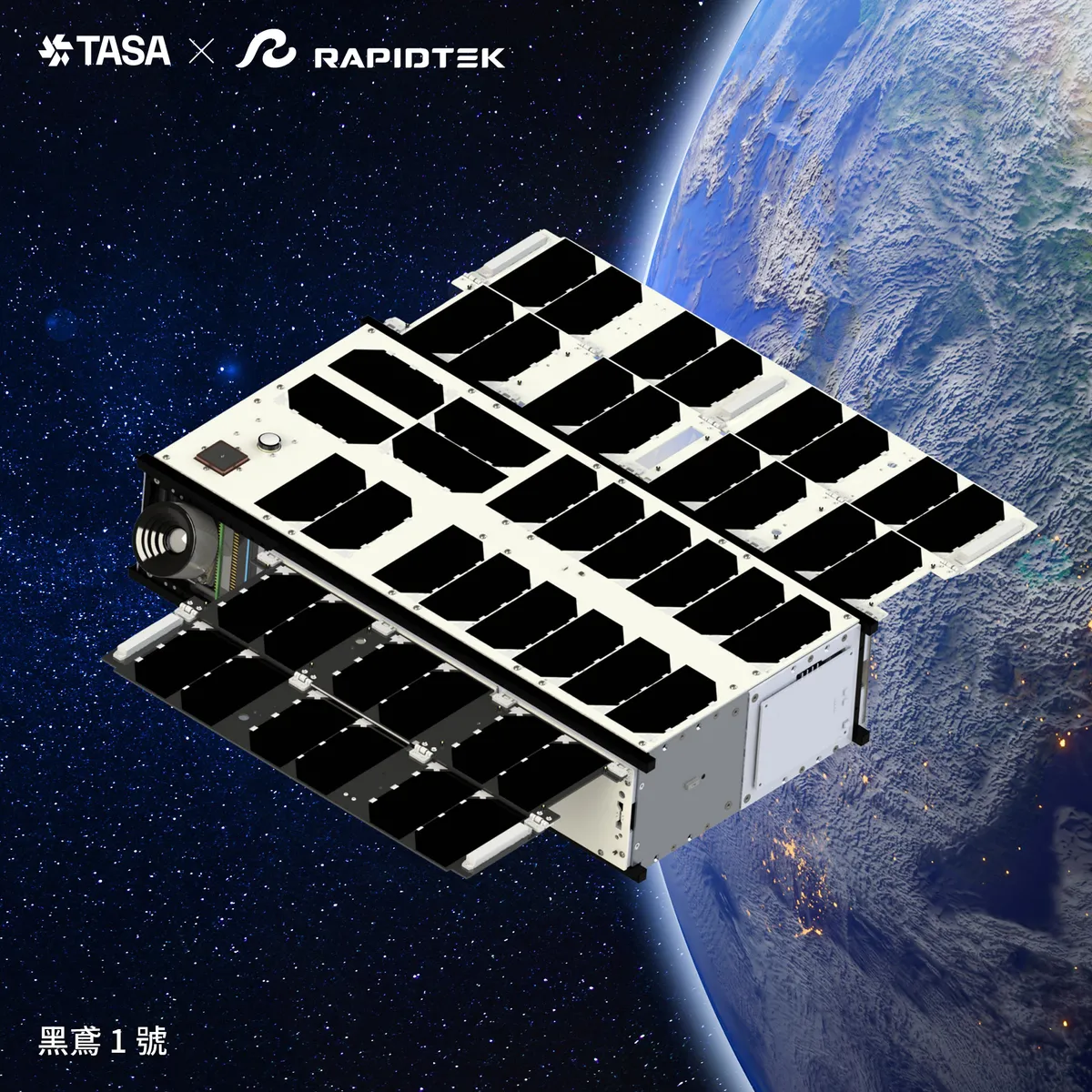
Black Kite-1 is an upgraded satellite succeeding the first-generation 3U CubeSat Nightjar from the Startup CubeSat Program. The satellite is named after the Black Kite, commonly known as a hawk, symbolizing a clear and far-reaching presence, swift speed, and strong adaptability, qualities that reflect the comprehensive upgrade from the 3U to the 8U CubeSat.

Arthur Wang, Chairman of Rapidtek, stated that the successful orbital insertion of Black Kite-1 marks a major milestone, as the company moves from single-satellite verification to multi-satellite constellation communications. He expressed appreciation to TASA and ITRI for their collaboration, noting that this achievement reflects progress not only in technology integration but also in Taiwan’s overall industry capabilities. 
 
Black Kite-1 is deployed in a Sun-synchronous orbit at an altitude of roughly 500 to 600 kilometers, passing over Taiwan one to two times per day with communication windows of about five minutes. Using Rapidtek’s self-developed ground stations, the mission verifies end-to-end communication performance through local and remote data relay. The mission focuses on three key objectives: confirming system stability and pointing accuracy; validating Rapidtek’s Ku-band high-speed and LoRa low-data-rate communication payloads; and testing the high-precision GPS receiver and space-grade GPGPU provided by TASA.

Compared with the 3U platform, the 8U satellite supports more payloads, users, and application scenarios, providing communication solutions for remote or underserved areas and showcasing the diverse potential of LEO IoT communications.
 
Looking ahead, Rapidtek will continue its LEO satellite constellation program, launching three more 8U IoT CubeSats from the Startup CubeSat Program in 2026. These satellites will not only serve as technology tests but also demonstrate Taiwan’s capabilities in LEO communications. The constellation will help establish an initial LEO IoT network for real-time data transfer from ground to space.

Rapidtek is committed to turning LEO communication technology into practical solutions and building a reliable network, leveraging the power of the constellation to seamlessly connect technology and daily life, while showcasing Taiwan’s expertise on the global stage. 

Sources [1] [2] [3]
Photo sources [1] [2] [3] [4]

Related Spacecraft

Name Status Rocket Launch date Orbit
Black Kite-1 (RIoT-1) Operational? (No news or amateur receptions found, last checked 2025-12-24) Falcon 9, (Transporter-15) 2025-11-28 510 km, 97.5 deg
Black Kite-2 (RIoT) not launched Falcon 9, (Transporter-16) 2026-04-01 not launched
Black Kite-3 not launched Falcon 9, (Transporter-17) 2026-06-30 not launched
Black Kite-4 not launched Falcon 9, (Transporter-17) 2026-06-30 not launched

Last modified: 2026-01-07

Feel free to connect at any time.

Created by Erik Kulu

Email: erik.kulu@nanosats.eu
LinkedIn: linkedin.com/in/erikkulu

Social Platforms

LinkedIn: Nanosats
Twitter: @nanosatellites

Sister Websites

NewSpace Index: newspace.im
Factories in Space: factoriesinspace.com

Copyright © 2014 - 2026 Erik Kulu

>body>
