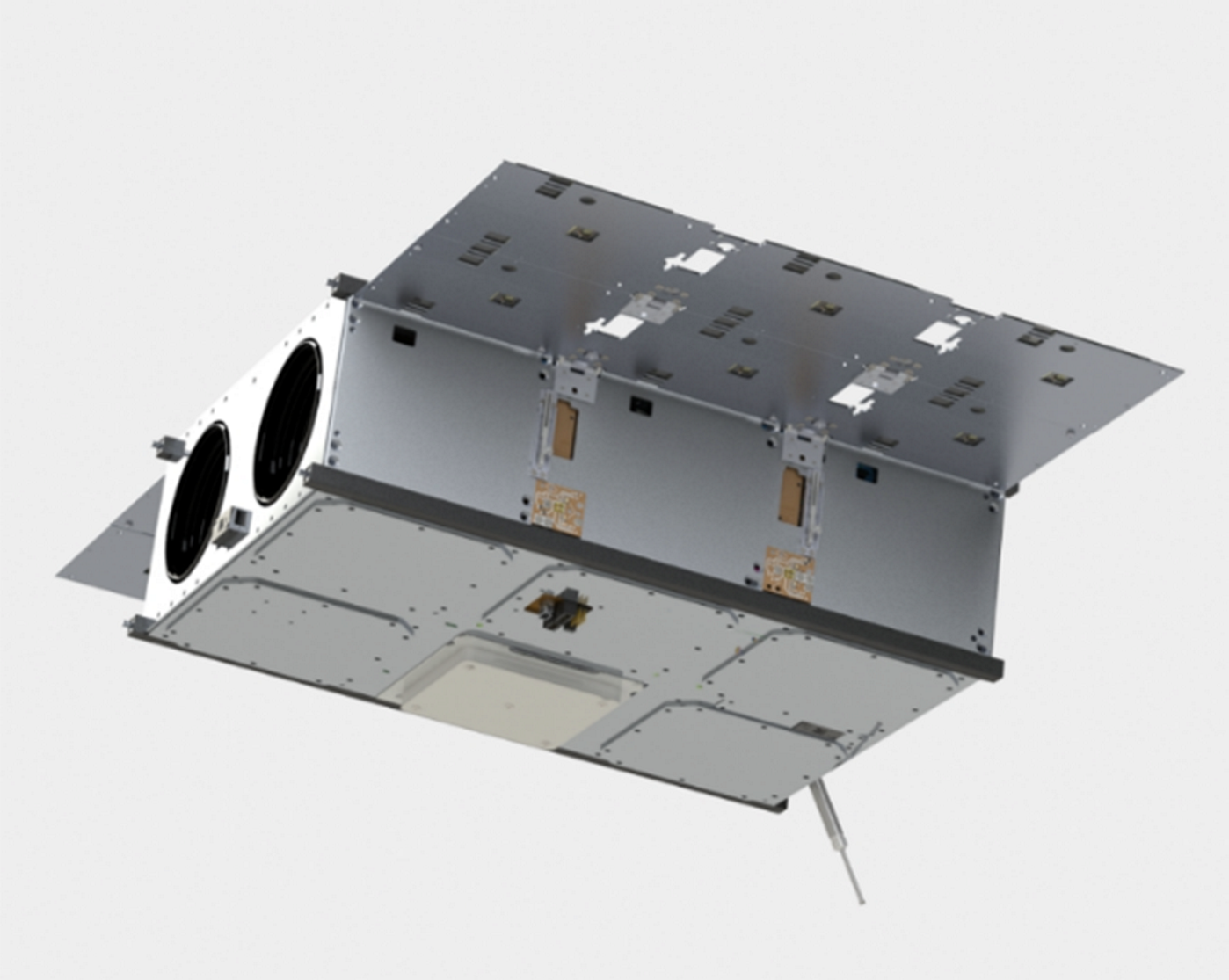
DUTHSat-2 Spacecraft

DUTHSat-2
DUTHSat-2
Satellite name DUTHSat-2
Spacecraft type CubeSat
Units or mass 6U
Status No signal? (Despite the "successful launch" news, amateur radio reports on SatNOGS have not been found and object not identified as of 2025-12-22)
Launched 2025-06-23
NORAD ID ?
Deployer EXOpod Nova 12U/16U [Exolaunch]
Launcher Falcon 9 (Transporter-14)
Organisation Democritus University of Thrace
Institution University
Entity type Academic / Education
Headquarters Greece
Manufacturer AIVT by ?
Operator ?
Partners The "Athina" Research Center, Athena Research Centre, Space Asics, Prisma Electronics
Oneliner

Sea pollution from oil spills will be detected by the remote sensing nanosatellite.

Description

Sea pollution from oil spills will be detected by the remote sensing nanosatellite.

DUTHsat-2 carries instruments for acquiring multispectral images of the Aegean Sea, Eastern Macedonia, and Thrace, as well as an innovative Essential Telemetry Unit (ETM) for transmitting core telemetry data from its main subsystems—even in the event of a failure of the central onboard computer. A specific mission objective of DUTHsat-2 is the timely detection of illegal oil spills from passing ships through the analysis of multispectral imaging characteristics.

The imagery and measurements will be used to provide yield information on soil moisture, as well as marine contamination. Additionally, the imagery frequency bands and the imager resolution have been selected to be able to detect both oil spills and ship bilge water pollution.

DUTHSat-2 will also perform in-orbit demonstration of an essential telemetry and housekeeping unit. The Essential TeleMetry and housekeeping (ETM) is the spacecraft version of a “black box”, allowing operators to have visibility over the spacecraft’s health in case of failures of the main subsystems. 

The mission was developed under the coordination of the Democritus University of Thrace (DUTH), in collaboration with the Space Program Unit of the Athena Research Center and the Greek companies SPACE-ASICS and PRISMA Electronics. These entities were responsible for the design, construction, and assembly of the satellite, the flight testing and sun-synchronous orbit simulations (SS-RTGO), as well as the full coordination of launch procedures.

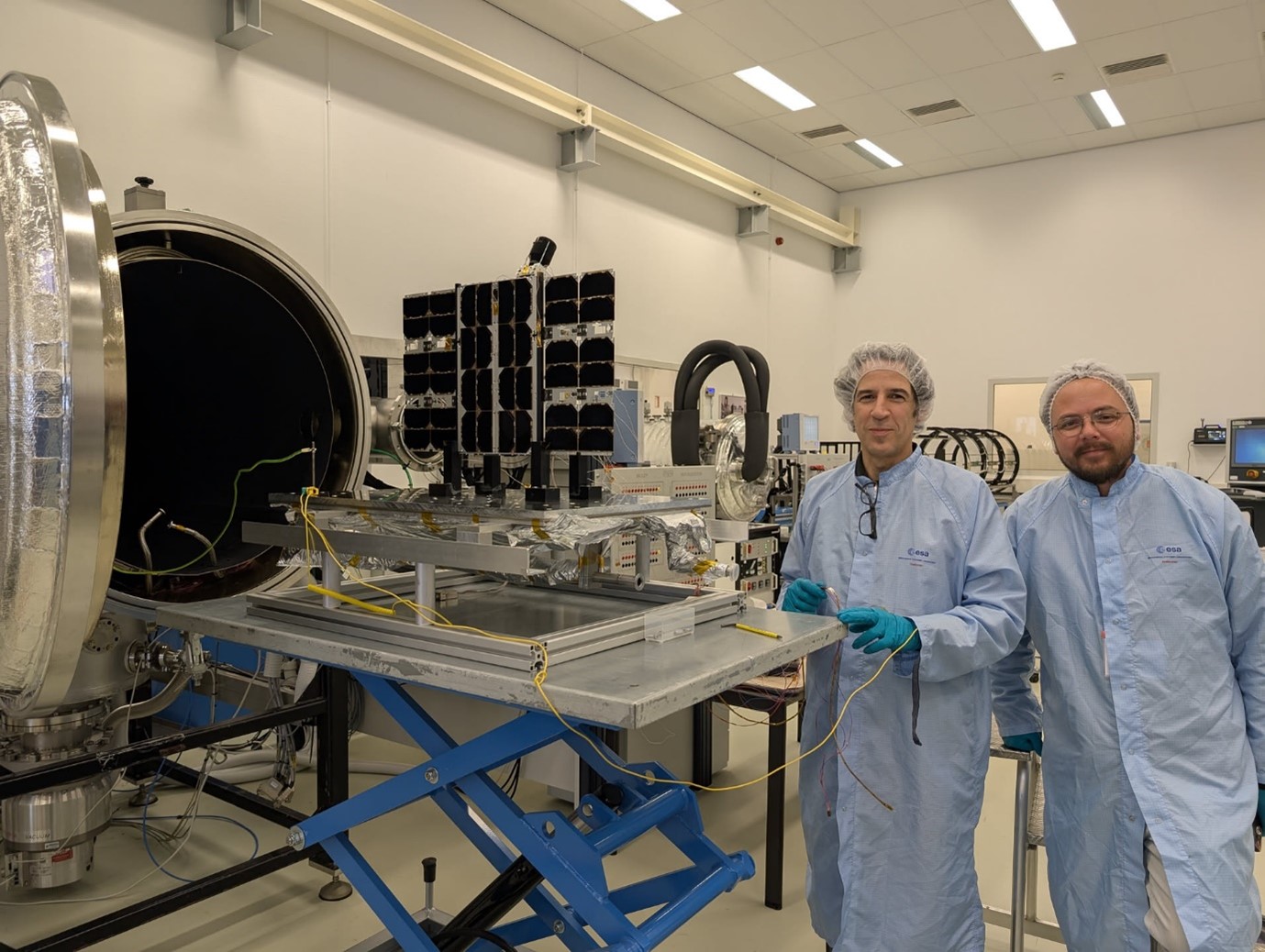
The DUTHSat-2 mission brings together Greek academia and industry, being led by the Democritus University of Thrace, and supported by the Athena Research Center and Greek companies Space Asics and Prisma Electronics SA. The spacecraft was assembled on site at the Democritus University of Thrace, with the design, assembly and test process guided and monitored by ESA’s Connectivity and Secure Communications.

Sources [1] [2] [3] [4] [5]
Photo sources [1]
On the same launch

Last modified: 2025-12-22

Feel free to connect at any time.

Created by Erik Kulu

Email: erik.kulu@nanosats.eu
LinkedIn: linkedin.com/in/erikkulu

Social Platforms

LinkedIn: Nanosats
Twitter: @nanosatellites

Sister Websites

NewSpace Index: newspace.im
Factories in Space: factoriesinspace.com

Copyright © 2014 - 2026 Erik Kulu
