
T.MicroSat-1 Spacecraft

T.MicroSat-1
T.MicroSat-1
T.MicroSat-1
T.MicroSat-1
Satellite name T.MicroSat-1 (Bellbird-1, Zhongque-1)
Type CubeSat
Units or mass 8U
Status Operational (Lots of packets with data on SatNOGS, last checked 2025-12-24)
Launched 2025-11-28
NORAD ID ?
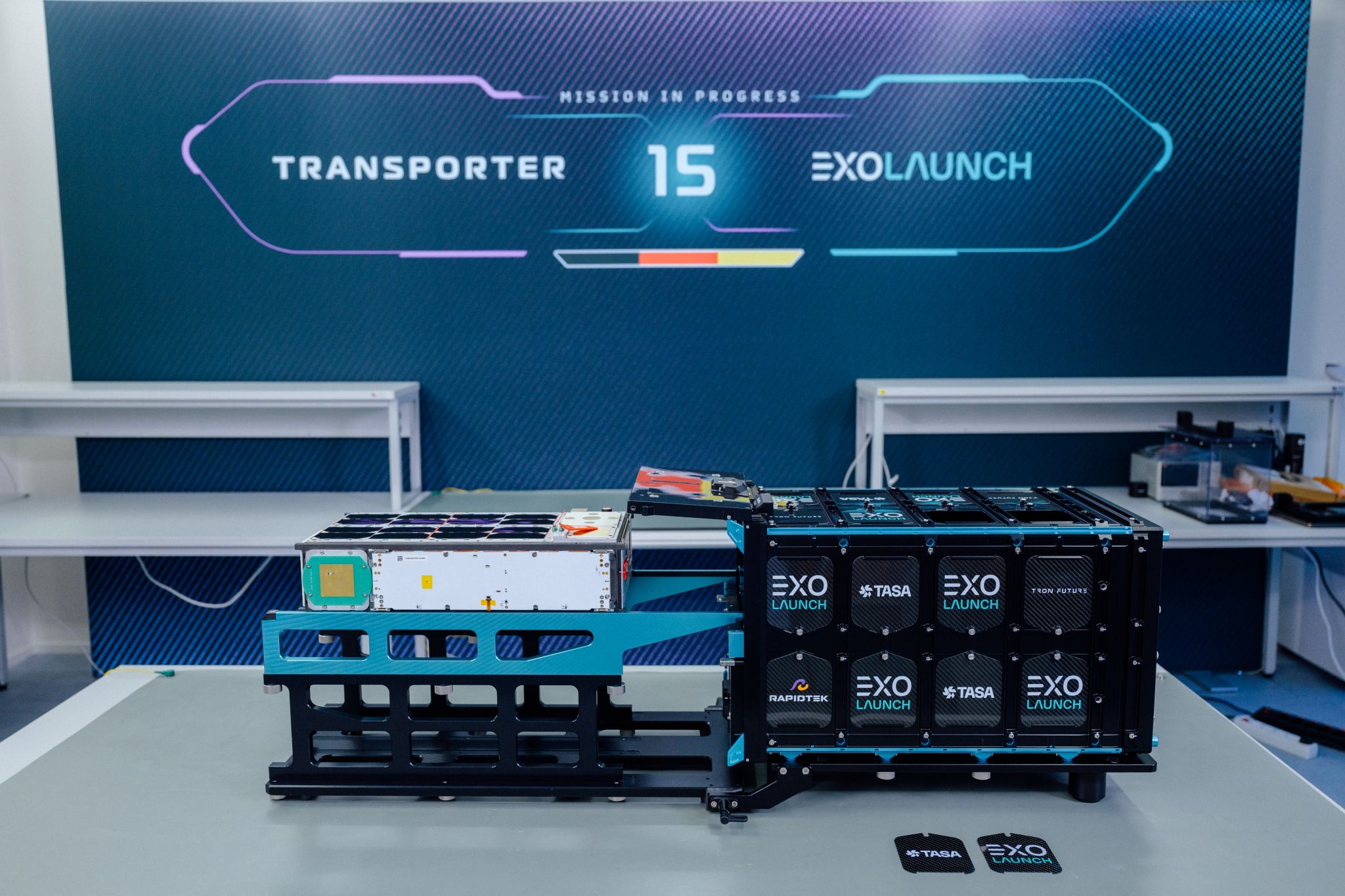
Deployer EXOpod Nova 12U/16U [Exolaunch]
Launcher Falcon 9 (Transporter-15)
Organisation Tron Future Tech
Institution Company
Entity type Commercial
Nation Taiwan
Oneliner

Demonstrate high-speed broadband and inter-satellite communications in orbit

Description

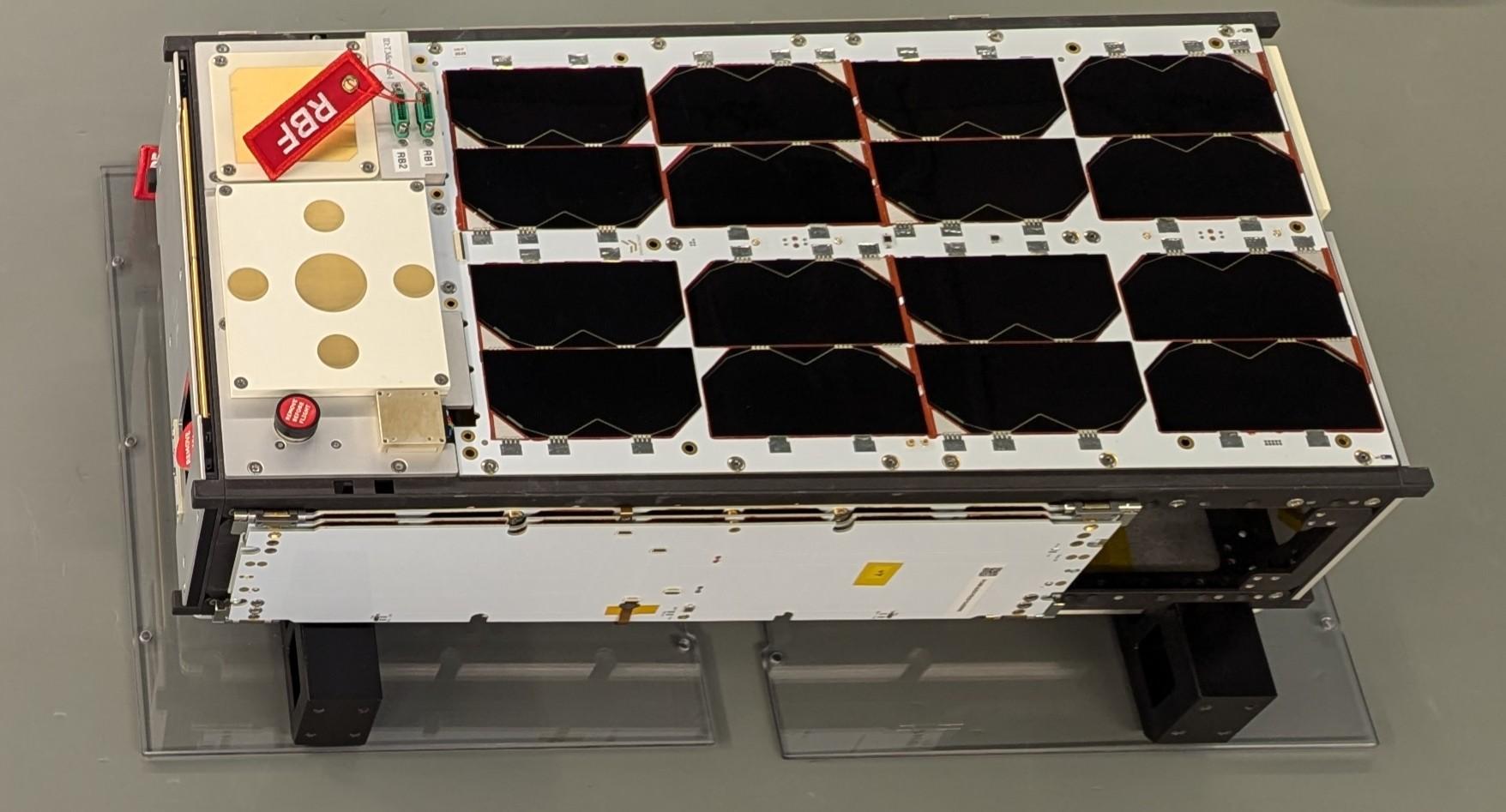
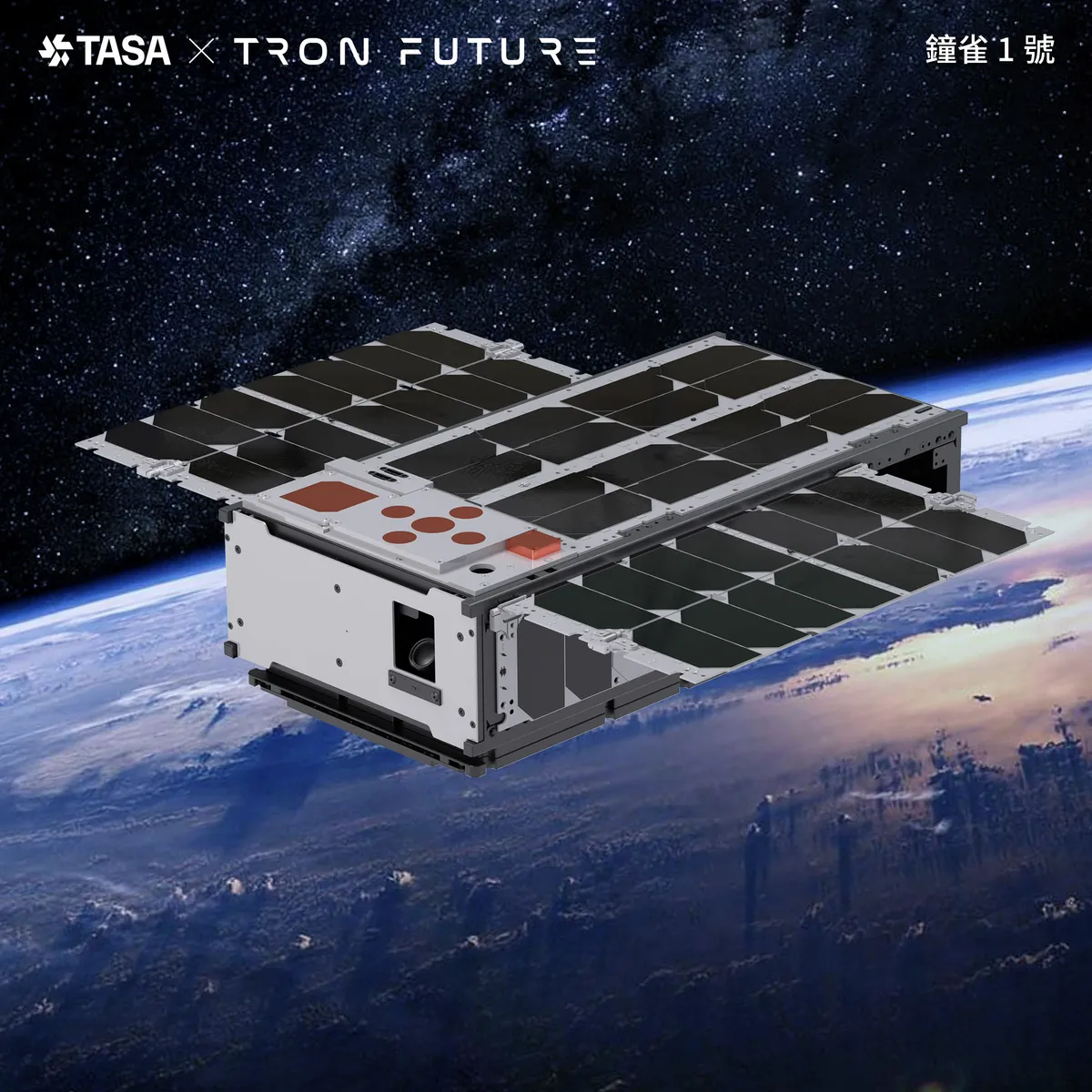
Bellbird-1 marks Tron Future’s first full CubeSat mission, covering mission design, integration, launch, and operations. It is the first of what the company envisions as a four-satellite Bellbird broadband constellation. Although the mission has been framed publicly as a B5G/6G technology verification effort, the Ka-band high-throughput payload on board carries capabilities that could address gaps in Taiwan’s existing tactical communications infrastructure.

The satellite is equipped with an active electronically scanned array (AESA) antenna capable of generating multiple beams and delivering transmission rates exceeding 100 Mbps. According to Tron Future, Bellbird-1 will also test several advanced communication functions, including multi-user support and sub-100-millisecond handovers, one-millisecond beam hopping, and inter-satellite links (ISL) with speeds above 1 Mbps.

The constellation will be deployed in two stages. In phase one, Bellbird-1 and a second satellite slated for launch in March 2026 will validate the core communications payload. In phase two, two more satellites will follow in June 2026, enabling full ISL testing. ISL capability means signals can be relayed across the constellation rather than relying on a single-satellite hop. Such resilience is particularly valuable for Taiwan’s offshore islands, maritime zones, and other communications-challenged regions. Future use cases include moving platforms such as ships, vehicles, and unmanned systems.

The type of high-mobility communications envisioned by the Bellbird constellation highlights a longstanding weakness in Taiwan’s current tactical communications system. At present, Taiwan’s military satellite communications rely almost entirely on a single geostationary-orbit satellite—ST-2—launched in 2011. Originally designed as a commercial broadcasting satellite, ST-2 provides defense-leased bandwidth but faces inherent limitations: its 36,000-kilometer altitude results in high latency, and its mechanical microwave components are poorly suited to modern, high-volume, real-time battlefield data demands.

By contrast, LEO broadband satellites like Bellbird-1 offer important physical advantages. Orbiting at high speed, they are far harder for an adversary to jam or track for extended periods. And with beamforming and phased-array antennas concentrating energy into narrow, precise beams, attempts at ground-based interference become significantly less effective.

With inter-satellite link verification expected in 2026, the Bellbird constellation may become Taiwan’s first domestically developed LEO broadband system capable of underpinning a more resilient national communications network—one that could complement, or eventually relieve, the aging ST-2 system. If successful, the program would mark a notable shift: from reliance on a single commercial GEO satellite to a dispersed, locally engineered constellation designed to keep Taiwan connected, even under the most challenging conditions.

Sources [1] [2] [3]
Photo sources [1] [2] [3] [4]
Keywords Ka-band
On the same launch

Last modified: 2026-01-04

Feel free to connect at any time.

Created by Erik Kulu

Email: erik.kulu@nanosats.eu
LinkedIn: linkedin.com/in/erikkulu

Social Platforms

LinkedIn: Nanosats
Twitter: @nanosatellites

Sister Websites

NewSpace Index: newspace.im
Factories in Space: factoriesinspace.com

Copyright © 2014 - 2026 Erik Kulu
