MARMOTSat Spacecraft

Spacecraft MARMOTSat
Form factor CubeSat
Units or mass 3U
Status not launched, expected in 2026
Launcher Falcon 9, (Transporter-17)
Organization University of Victoria
Institution University
Entity Academic / Education
Headquarters Canada
Launch brokerer Exolaunch
Oneliner

Educational mission with open-source amateur radio payload.

Description

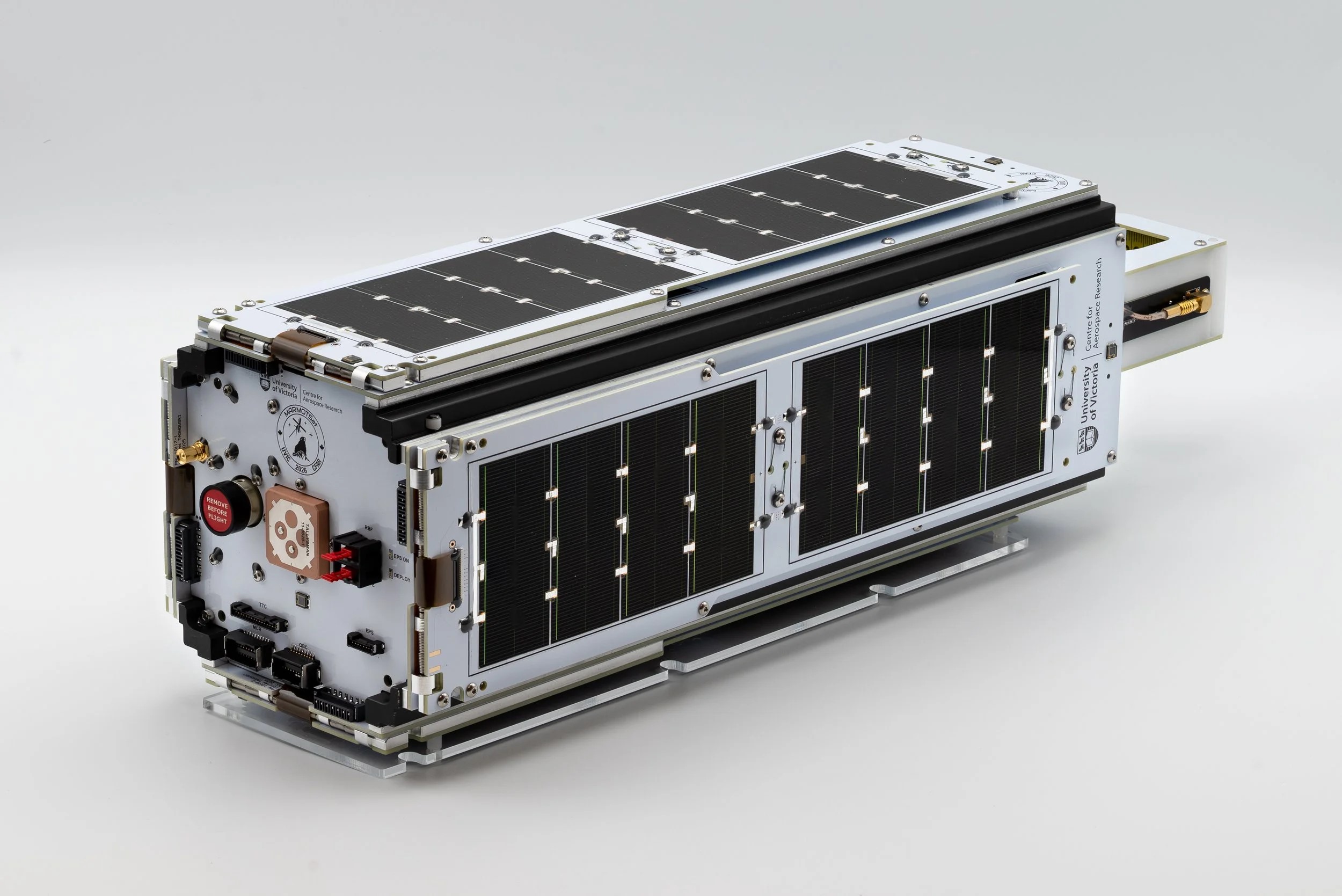
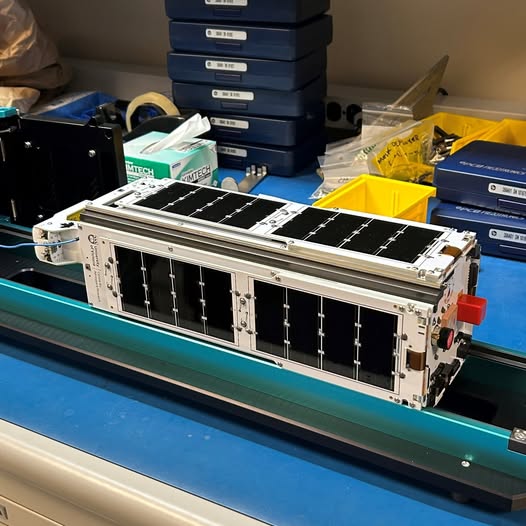
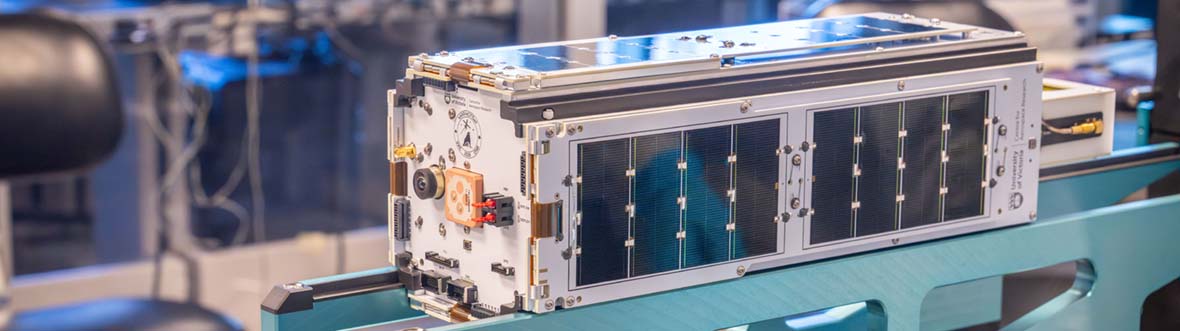
The core mission of the MARMOTSat project is training of highly qualified personnel (HQP) in radio communications, as well as science, technology, engineering, and mathematics (STEM) in general, via participation in a real life Amateur radio themed 3U CubeSat mission.

MARMOTSat intends to be Canada’s first official OSCAR designated satellite. It is focused on the provision of two way digital communication services and novel radio communication experiments to Amateurs around the globe, as well as the facilitation of citizen Amateur and university science related to the ionosphere, which is of key interest to Amteur radio operators worldwide, due to its close correlation with HF propagation. In addition, another focus of the mission is the space qualification of a major, new open access Amateur radio communications hardware and software project, the Modular CubeSat Radio.

The payload of MARMOTSat, and the basis of all experiments flown on the satellite is the first flight of the open source Modular CubeSat Radio (https://gitlab.orcasat.ca/open-source-projects /mcr), an initiative by the MARMOTSat project team (all licensed Amateurs) at University of Victoria to create a modular, state of the art, easy to use, ITAR free RF system to decrease the barrier to entry to OSCAR mission development, and increase the utilization of Amateur spectrum, and microwave Amateur bands in particular, around the globe.

The Modular CubeSat Radio ecosystem consists of an HF SDR, a computer, a low resolution outreach camera, and up to four RF transverter/amplifier modules, which allow access to microwave bands while re-using the core of the system. For the debut of this project, besides the core (SDR+ computer) and the camera, a 10m HF power amplifier module and a VHF transverter module will be flown on MARMOTSat, to verify and demonstrate the ecosystem via select Amateur radio experiments, which provide communication services, or facilitate interesting learning and science which is of interest to Amateurs. However, the entire ecosystem has been designed in a manner to be easy to build and modify by hobbyists or students around the world, including a module template which facilitates the construction of RF front ends for any Amateur bands of interest.

The traditional Amateur experiments flown on MARMOTSat are a half duplex IO-117 style digipeater and a CW telemetry beacon on VHF, a 10m CW telemetry beacon, and a DVB-S2 beacon, compatible with 33ksym/s or 66ksym/s QO-100 style transmissions on 10 m providing a live video feed for reception by Amateurs from an on board camera. In addition to the traditional Amateurs services and experiments above, a transionospheric sounding experiment to facilitate the study of the ionosphere will also be conducted. To this end, the HF amplifier from the DVB-S2 experiment is re-used for the provision of a linear frequency modulated (LFM) signal from orbit on 10m to allow the study of the structure and composition of the ionosphere via reception on the ground. This will be done by Amateur citizen scientists around the world, and also by the LWA radio telescope in New Mexico, USA, as part of the MARMOTSat mission Amateur radio sponsor’s ongoing research program there. 

Notes

One of 9 winners of the 2023 CUBICS Canadian CubeSat Project.

Sources [1] [2]
Keywords Open-source

Last modified: 2025-12-29

Feel free to connect at any time.

Created by Erik Kulu

Email: erik.kulu@nanosats.eu
LinkedIn: linkedin.com/in/erikkulu

Social Platforms

LinkedIn: Nanosats
Twitter: @nanosatellites

Sister Websites

NewSpace Index: newspace.im
Factories in Space: factoriesinspace.com

Copyright © 2014 - 2026 Erik Kulu
