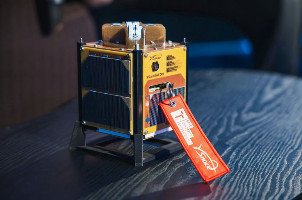
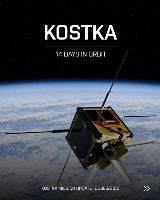

| Spacecraft name | Kostka |
|---|---|
| Type | CubeSat |
| Units or mass | 3U |
| Status | Operational (Many reports with data on SatNOGS, last checked 2026-07-31) |
| Launched | 2026-07-07 |
| NORAD ID | ? |
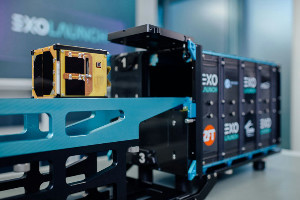
| Deployer | EXOpod Nova 12U/16U [Exolaunch] |
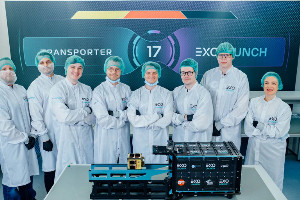
| Launcher | Falcon 9 (Transporter-17) |
| Organisation | Brno University of Technology |
| Institution | University |
| Entity | Academic / Education |
| Country | Czechia |
| Partners | YSpace |
| Oneliner |
Demonstrating student-built amateur-radio services, image transmission, antenna deployment, and UHF interference measurements. |
| Description |
First mission of the YSpace student team at Brno University of Technology, Department of Radio Electronics, and is designed and built by students as the first student-built amateur satellite of its kind in the Czech Republic. The satellite will be used for amateur radio activities to inspire the public and young people to engage with the amateur radio community, and to promote student-built satellites as an educational platform for satellite communication and operations. Campaigns for the amateur radio community are planned after launch and will be announced in advance on a dedicated mission website, together with key technical information. As a university-developed project, bachelor’s and master’s theses related to the mission will be published by students participating in the design and development, helping to share knowledge with the wider community. In addition, workshops for students and teachers will be organized on satellite and amateur radio communication, including practical guidance on how to communicate with the satellite and how to receive and process telemetry data and images. The satellite will operate in the amateur- satellite UHF band and provide amateur radio services such as AX.25 messages and telemetry, a digipeater service, CW beacon, SatNOGS integration, and SSDV image transmission. Uplink and downlink will use GFSK G3RUH 9600 Bd. Additionally, the satellite is equipped with an experimental in-house UHF receiver and a custom in-house cross-dipole antenna. First, the antenna deployment system will be tested. If deployment is successful, the receiver’s wide bandwidth capability will be used for radio-frequency interference measurements in the 70 cm amateur band. The team behind the mission expects increased public interest in radio communication and in obtaining amateur radio operator licenses, especially among those interested in communications and space. |
| Sources | [1] [2] |
| Photo sources | [1] [2] |
| On the same launch |
|
Last modified: 2026-07-31
